The countdown is on - Just a week and a half until the opening concerts of the KSO's 80th Anniversary Season! With all cylinders firing, the KSO will kick off the 2015-16 at the Tennessee Theatre, featuring the music of four true American Masters: Gershwin, Bernstein, Barber and Chadwick.
The orchestra, conducted by Resident Conductor James Fellenbaum, will perform Chadwick's Jubilee from Symphonic Sketches and Barber's heavenly Adagio for Strings, and will be joined by 26 year-old pianist Sean Chen for Gershwin's Concerto in F. The program concludes with Bernstein's iconic Symphonic Dances from West Side Story.
Performers like us feed off an energetic audience, and we're counting on a youthful energy in the audience on September 17 & 18 at 7:30. The average age of this season's Music Director candidate guests is in the 30s. Gershwin was 27 when he wrote his Concerto, and Barber 26 when he wrote the String Quartet from whence the Adagio is drawn. This only serves to reinforce my conviction that this season's repertoire in general and the September Masterworks concerts in particular are perfectly suited to Knoxville's burgeoning twenty- and thirty-something demographic looking for a classy night on the town. Be a part of Knoxville's Arts scene with tickets that start at just $15. Drastic savings can be had with season tickets as well.

Tuesday, September 8, 2015


Wednesday, September 2, 2015
Back to School with KSYO
335 students to play in Knoxville Symphony Youth Orchestra this year
A new school year kicks off of the 42nd season of Knoxville Symphony Youth Orchestra. The Association, which includes 5 youth orchestras, consists of students ages 6 - 18 of all skill levels. We had RECORD-BREAKING numbers of kids audition this year, and 335 were accepted into the KSYO!
82% of these students reside in Knox County, and will get to work with professional musicians and coaches as they practice their instrument. Students will rehearse weekly throughout the school year and perform 4 concerts, free to attend. Did you know we had this overwhelming number of talented young musicians in Knoxville?
Many thanks to all the judges and wranglers of the audition process - and a huge shoutout to all the students and parents who ensured many hours of practice over the summer! Have a great year.
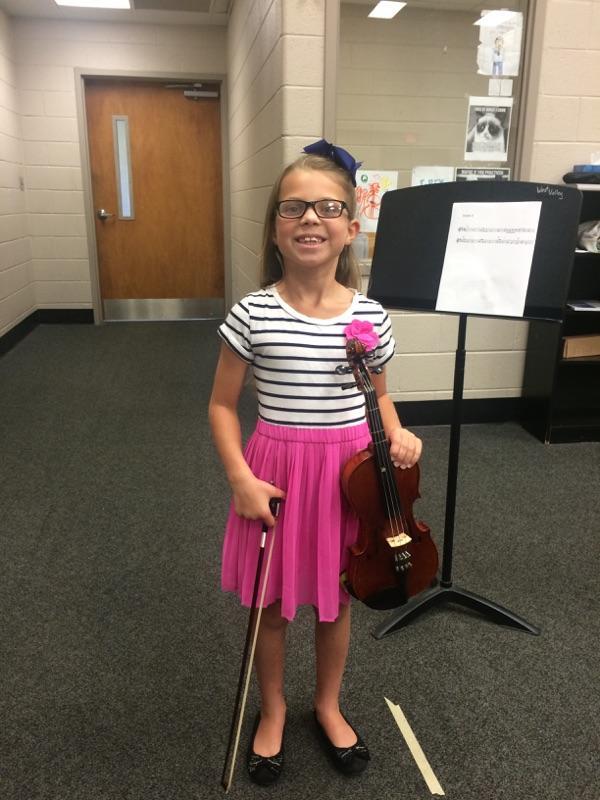
Here are some students at their auditions, held in August.



Here are some snapshots from a 2014 KSYO concert.


This post authored by Rachel Dellinger, KSO Director of Communications.
Wednesday, August 19, 2015
Tickets, Youth Orchestras, and Ageeana
The
time has finally arrived, and the KSO's season and tickets are on
sale now! While Monday was the launch date, handling fees will be
waived on phone orders until this Friday the 21st. A
cavalcade of guest conductors will be appearing throughout the year.
It will be an eventful season as we seek a new director to pilot us
through the unfamiliar yet beautiful waters ahead. Don't forget that
Penny4Arts is still around. Under
this plan a child can attend a KSO concert (or events presented by a
host of other arts groups in town) for a penny,
when accompanied by a paying adult. Kids fly free!
It's
perhaps on the late side if your child wants to audition, but the
Knoxville Symphony Youth Orchestra will be holding auditions this
coming weekend. The KSYO braintrust is preparing for the group's
42nd year of performances, which will be November 16,
February 14 and 15, and May 2. Information and repertoire can be
found on the website or by clicking here.
-------------------------------------------***************************------------------------------------------
Only
someone living in a math-deprived world would fail to notice that
this is the figurative 100th anniversary of Knoxville's
musical badge, Knoxville: Summer of 1915,
written by
Samuel Barber in 1947 and
excerpting James Agee's prologue to A Death in the Family.
I've
been surfing for information
on where James Agee's life
began-- and also where his father's ended. It
is interesting to think on these places when listening to the work.
Two tremendous
sources of knowledge than
on these matters are the
blogger commonly known as Knoxville Urban Guy, and Knoxville
historian and writer Jack
Neely.
A
few years ago, KUG posted something about the site of Agee'schildhood home, which is now called James Agee Park in the
Fort Sanders neighborhood,
at Clinch Ave. From time to time, events are held here in
celebration of the
flag-bearer of Knoxville's
literary heritage. While
that particular block of the Fort has been given over to student
housing over the past century, a block more evocative
of that era might be the 1600 block of Forest Ave. Perhaps Agee's
childhood friends resided there.
As
for the accident that took Hugh James Agee's life in 1916 and
inspired his son's Pulitzer-Prize-winning novel A Death in
the Family, the location is not
particularly glamorous, but certainly storied. Jack Neely is arguably
Knoxville's
most well-versed person in Ageeana, by dint of research for his
Secret History columns in the Knoxville Mercury
and its predecessor, the MetroPulse.
The intersection of Clinton Highway and Emory
Rd. is as close as modern configuration can determine the accident
site. For years, Jack and others would congregate at the Checker Flag
Sports Bar and toast the tragic event-- he has even spoken to someone who remembered the accident. Here is a MetroPulse article (amazingly still available), mourning the closing of the
Checker Flag four years ago.
Sunday, August 9, 2015
Rap on Clapping
Concert-goers new to
the classical scene are always asking, “when can I clap?” In
pondering an answer to this question, I came across some interesting
facts and trends on various websites of symphony orchestras and
record companies, and even some discrepancies as to the basis for the
tradition. One source claims that the idea of saving applause for
after the final movement of a piece is actually a pretty recent (only
the last 50 years or so) phenomenon, while another says that the
protocol is firmly rooted in the German tradition, dating back to
Mozart's time.
How you might react
at a concert should not be something to stress over. It's not your
fault that composers wrote works in such a way as to “fake you
out,” with false endings only a third of the way through a work.
The tendency worldwide is to favor between-movement applause,
especially after big endings where it is hard not to applaud, but not
as an obligation after every single movement, regardless of its level
of finality. After a movement that ends quietly, it is
preferred that there be no applause, as the silence between movements
here serves as a tension builder. When an entire work
ends quietly, it is extremely jarring when one or maybe two attendees
clap before the final note has even faded away. When
this happens, the applauders, or shouters of “Bravo,” become
performers, proving
to all that they know when
the work is over. (Or
perhaps that they are following along in a score to the work). There
are no awards for being the first person to clap; if there is any
doubt, it's ok to be a follower and not a leader; the
conductor will put down his baton and turn around and bow. I
feel safe in quoting Billy Joel here; “Leave a tender moment
alone.” Like most musicians, I cherish that span of silence that
lay between the final placid note and the first pair of clapping
hands. In any case, if someone's applause bothers you at a concert,
it is NOT ok to express your dismay by giving them the hairy eyeball.
Let's look at some
other questions that surface from time to time. I have used the
terms “movement,” “piece,” and “work” above, but never
the word “song.” To hear iTunes tell the story, everything that
has sound is a “song,” whether it is a 5-hour Wagner Opera, a
Bach cantata, or one of those little 20-second snippets of song on
the Beatles' Let It Be album
(like Dig
It). Sure, iTunes, whatever.
The concert hall reality is that classical composers write works
(think
“work of art”) or
pieces,
which may have several sections or movements.
They
may write song
cycles,
literally an album of songs, but that album
as a body
is referred to as a piece
or a work.
Confusion
happens when there are differing styles and tempi
within an individual movement. Prokofiev
did this a lot. It
can also happen when two movements are linked together. (Musicians
call this practice attacca,
Italian for “attached”). In
my first season here, maestro Kirk Trevor conducted Brahms 4th
Symphony with the final two movements linked very seamlessly, and
when the Thursday night performance was over, (thinking
the third movement was actually 16 minutes long),
no one clapped! He had to step off of the podium and bow to convince
the audience that there was not another movement forthcoming. The
Friday night show utilized a somewhat longer pause between the third
and fourth movements.
I
think
we can all agree that, applause or not, there is no worse interrupter
of a classical concert than a cell phone going off. We depend on the
audience to be sticklers for silencing their phones, and for not
answering
them (but
silencing them discreetly) if
they do ring. I
refer you to a scene in the 2000 Woody Allen film, Small
Time Crooks,
wherein Tracey Ullman answers a cellphone call in the middle of a
cello recital. It's a ridiculously funny social commentary, brought
off as only Woody can.
My
words here are by no means the gospel on this subject. Here are a
couple webpages whose content I found useful. NeoClassical is a blog by Holly Mulcahy, concertmaster of the
Chattanooga Symphony. I especially liked that she had advice for experienced
concert-goers and newbies alike, with some special guidelines for
conductors. And this Colorado Public Radio story gives some
historical background to the differing customs regarding this issue.
Friday, July 31, 2015
Apprentices and Assistants: An Overview
Since my arrival
here in 1986, the KSO has had a succession of apprentice and
assistant conductors who have brought new approaches and twists to
the podium while learning the tricks of the trade. I thought it would
be interesting to dig a little bit to see the achievements these
folks have made. I can't tell you how much easier the internet makes
this task.

Sergio Bernal before... (center, with shades, at a bad taste party in 1989)
and today.
Russell Vinick was the
first musician I met in Knoxville who came from the same central
Connecticut primordial soup as me. It was such a relief to finally be
able to go get a grinder (known as a “sub” or a “hoagie” most
everywhere else) with someone and reminisce about the 1978 Hartford
Civic Center roof collapse. Today, Russ lives in Chicago and is the
Music Director of (among other things) the Chicago Metropolitan
Symphony Orchestra, “Chicago's original community orchestra.”


Russ Vinick
Up until the
mid-90s, the presence of an apprentice conductor was solely at the
discretion of Maestro Trevor, but starting in 1995 (I THINK), the KSO
instituted an official apprentice conductor position. Tuba player
Sande MacMorran was the official assistant conductor, whose job was
to conduct rehearsals in the Maestro's absence, or to take to the
podium so that the Maestro could hear orchestra balance from out in
the house to check balance. This situation was inherently awkward,
since an orchestra member's part would then be missing from the mix-
and the tuba is an important element in that mix. I am a little
sketchy on the exact dates the apprentices were in town, but I'm
petty sure they are as follows.
A native of Dawson
Creek, BC, Charles Demuynck is currently a composer and conductor
heard throughout Canada and the US. My stand partner at the time
(1995-96), Carey Cheney, was also a Canuck, and the two of them were
always reminiscing about good times in the “old country.” Charles
is now Music Director of the Oakville (ON) Chamber Orchestra, and is
in heavy demand in the Toronto area.

Charles Demuynck
Conductor-violinist
Navroj “Nuvi” Mehta came to Knoxville for the 1996-97 season. Nuvi had the distinction of having the longest arms I have ever seen
on a conductor (rivaling Leif Seigerstam), and his performance of
David Diamonds Rounds for String Orchestra
was an exciting experience. He has been the Director of Educational
Outreach for the San Diego Chamber Orchestra since 1999, and
continues to be involved with
the San Diego Symphony. He can be seen here in a podcast interview
for a performance of Beethoven's 5th
by the SDSO.

Nuvi Mehta
Tara Simoncic was
here for the 1997-98 season, another apprentice who the musicians
could relate to and bond with. Her current activities take her all
over the world, but she is probably most well-known as the long-time
conductor for the Louisville Ballet's annual Nutcracker
performances.


Tara Simoncic
Our apprentice
conductor for 1998-99 was Rufus Jones, Jr. Rufus was a studious
conductor with a passion for the music of African-American composers
such as William Grant Still and Samuel Coleridge Taylor. After his
stint with the KSO, he went on to guest conduct near and far,
including the Maggio Musicale Fiorentino
(Musical May) in Florence, Italy, but his major focus has been on
research in the area of African-American conductors and composers. You may have seen him on PBS's Tavis Smiley just a couple weeks ago,
on which he plugged his new book entitled Dean Dixon: Negro
at Home, Maestro Abroad. The book explores the fascinating yet tragic life and career of Dean Dixon,
the first African-American conductor to lead the New York
Philharmonic. Here is that interview.


Rufus Jones, Jr.
Daniel Meyer was
enlisted as the KSO's apprentice conductor for the 1999-2000 season. The orchestra's strong financial condition fostered the creation of a
new Assistant Conductor position, with former Assistant Sande
MacMorran now Associate Conductor. Dan's confidence and ability on
the podium were such that he was hired in that capacity. I will
always remember his performances of the Young People's Concerts, in
which I played The Swan from
Saint-Saëns'
Carnival of the
Animals.
When
Maestro Lucas Richman was selected as Music Director of the KSO in
2003, he essentially traded places with Dan,
who assumed the Assistant Conductor position with the Pittsburgh
Symphony which Maestro Richman had vacated to come here. Currently
the Music Director of both the Erie Philharmonic and the Asheville
Symphony, Dan somehow found the time in March of 2011 to return to
Knoxville to conduct the KSO in Holst's The
Planets.


Daniel Meyer
Swiss native
Cornelia Laemmli Orth brought a refined European style, an
effervescent sense of humor, and an unflagging, sincere smile to the
podium in 2002. Her tenure here tided the orchestra over during the
transition between Maestro Trevor's and Maestro Richman's Music
Directorships. In the years since her appointment, Cornelia has been
Music Director of the Oak Ridge Symphony and the Symphony of the
Mountains (formerly the Kingsport Symphony) in upper East Tennessee. Since the apprentice conductor post was discontinued during Maestro
Richman's tenure, her proximity to Knoxville has fortunately resulted
in repeat engagements with the KSO on Pops concerts and run-outs.


Cornelia Laemmli Orth
Saturday, July 25, 2015
Pops, Pops and More Pops! (corrected)
While the KSO Masterworks Series has a lot to offer with its all-star repertoire and its parade of guest maestros, the Pops Series packs a wallop, too, with six concerts that run the gamut of popular culture and music.
Starting with a bang is the “Classical Night Fever,” a 70s disco revue that will whisk you away to the days of dance floor derring-do, platform shoes and disco balls. Our guest ensemble, Motor Booty Affair, keeps a busy schedule around their Maine home base, but they will board their flying funk machine to the Tennessee Theatre on FRIDAY, Oct 2nd at 8:00. (Please note that except for this one, all of the subsequent Pops concerts will be Saturday nights, and will start at 8:00 at the Knoxville Civic Auditorium).
1940 was a great year for movies, with The Great Dictator, The Grapes of Wrath, The Philadelphia Story and Foreign Correspondent all capturing the imagination of adult viewers, and Pinocchio and The Blue Bird charming the kids. One movie was released, however, that won over movie-goers of all ages, and that was Fantasia, celebrating its 75th anniversary this year. On January 16th, 2016, the KSO will be providing music to scenes from Fantasia, including Mickey Mouse's ever-popular Sorcerer Scene. IMDb has a lotto say about this wonderful film, and also provides some interesting trivia.
As a prelude to Valentine's Day, the KSO will present songs of Rodgers and Hammerstein on February 13th. Wouldn't It Be Loverly if you took your sweetie to the Civic to hear love songs and songs you love? (Say yes). Tunes by other Rodgers collaborators, such as Lorenz Hart and Jerome Kern, will also be performed, adding up to what will surely be Some Enchanted Evening.
The Fifth Dimension will grace us with a return engagement on March 12, 20 years after their first appearance with us in May of 1995. Their 60s and 70s hits are baby-boomer anthems, hearkening back to a pre-Auto-Tune era when what you heard was what you got.
In 1975, I bought my first stereo, and was thus indoctrinated into the world of record collecting. My first purchases were Goodbye Yellow Brick Road, by Elton John, and Led Zeppelin IV. I wore out that Led Zep album, trying to unlock the secrets of Jimmy Page's guitar playing, while my parents wondered when I would unlock my cello case. On April 9, Windborne (who brought us The Music of Queen this past April) will be back, this time with a program of Led Zeppelin's music. This very first of Windborne's productions is now in its 20th year, and features gritty Classic Rock hymns such as Kashmir, Black Dog, Stairway to Heaven, and Good Times, Bad Times. I don't need to add that this will be a GOOD time.
For the grand finale of the News-Sentinel Pops Series, we will be hosting none other than Kenny G! OMG! If songs like Yakety Sax and Junior Walker's Shotgun helped put the saxophone on the pop map, Kenny G built an entire empire based upon the sax. Songs like The Moment, Songbird and Forever in Love are staples in a genre that really only includes him. This smooth jazz feast will take place on May 7th.
Sunday, July 12, 2015
Summer Reading List, Part 2
Where were we, I guess it was January!
Personally, the bulk of next season's uncharted (by me) territory
will be trod by the end of January. After that, the repertoire tends
to be more familiar and includes some more of my all-time favorites. On
the 21st and 22nd at the Tennessee Theatre, our guest conductor, Aram
Demirjian, will lead the orchestra in an eclectic program that begins
with music of John Adams and Gyorgy Ligeti. My favorite violin
concerto, the Bruch, will follow, spotlighting violinist Philippe
Quint, and what better way to get you over the January blues than
Beethoven's radiant 7th Symphony? The 2nd
movement Allegretto is as perfect a
piece of music as has ever been written; if you have seen The
Fall, Mr. Holland's Opus, The Darjeeling Limited, or
The King's Speech, then
you've heard it and know what I am talking about. There are probably
three dozen movies all told that have sampled
it.
Another eclectic Masterworks concert comes along on February, 18th and 19th, this time with guest conductor Eckart Preu. The repertoire comes from Spain-via-Weimar (Strauss' Don Juan), Verona-via-Moscow (Prokofiev's Suite from the Romeo and Juliet ballet), and..... Seymour!? Yessiree, Heritage High graduate Jennifer Higdon's blue cathedral is the most-performed orchestral work written in the last 25 years. In the classical realm people say “Higdon” as they would “Strauss” or “Mozart,” especially now that she has won a Pulitzer Prize for her Violin Concerto. Anyway, the wingspan of this repertoire will have us burning the midnight oil, for sure.
Mention
the words “Brahms Sextet,” around string players, and they will
coo. Both of his sextets
are lush and captivating earlier works of his that
set the bar out of reach for their genre. Gabe Lefkowitz and Friends
performed the B-flat sextet in March of 2014, and will complete the
cycle on April 6th
and 7th
at the Knoxville Museum of Art with the G Major Sextet. Coooo....
Gabe will return to the
spotlight on the April 24th
Chamber Classics concert, soloing on the Mozart G Major concerto.
This concert, directed by Resident
Conductor James Fellenbaum,
will conclude with Dvorak's Serenade for
Strings. As radiant as the
Beethoven 7th
but on a smaller scale, you
can practically smell the kolaches
during the 2nd
movement Tempo di Valse.
By
May, we will mostly likely have chosen a new Music Director. Many
things will be learned and revealed about the candidates, and
I am really looking forward to the process. The
final Masterworks concert on May 12th
and 13th
will again be led by James Fellenbaum, and will feature Beethoven's
longest (and IMHO, best) overture, the Leonore No. 3,
with its cockamamie violin outburst and offstage trumpet call. The
concert (and the season) will end with a suite from Wagner's
monumental Ring Cycle, music which always pushes the envelope on
orchestral achievement. It's
fitting that maestro Fellenbaum gets the last word in on this season,
a reward for his tireless, quality work piloting the orchestra
between Music Directors, and
for his capable and tactful handling of every duty with which the KSO
has entrusted him in during his tenure here. We look forward to his continuing presence on the podium and in the community. Way to go, Jim!
Subscribe to:
Posts (Atom)