Thursday, September 24, 2015

Chamber Classics Kick-off

On Sunday September 27th, the Chamber Classics series will open at the Bijou with guest clarinet soloist Victor Chavez and Resident Conductor James Fellenbaum.  The Knoxville Symphony Orchestra is currently celebrating its 80th season, but a more intimate branch of the organization, the Knoxville Symphony Chamber Orchestra, will be starting its 34th season.  The embryonic stage of the group and its founder, Zoltan Rosznyai is detailed on the KSO website's history page.  Since it is rather hard to find, I've excerpted a paragraph…

In summer 1979 Mr. Rozsnyai almost single-handedly pulled together the Knoxville Chamber Orchestra, later called the Knoxville Symphony Chamber Orchestra, by convincing a number of KSO musicians and a few others (including David Van Vactor recruited as a flutist) – 34 in all – to perform without compensation a concert from the chamber orchestra repertoire on July 21, 1979 at First Christian Church on Fifth Avenue at which no admission was charged. It was a revelation.  The performance was acoustically stunning and, at last, a Knoxville audience was able to hear just how good the KSO’s musicians had really become.   With the 16-member professional core added in 1981, the orchestra’s five-concert Chamber Classics series was inaugurated by the Society for the 1981-82 season at the acoustically superior Tennessee Theatre, and then moved in 1983-84 to the more intimate Bijou Theatre where it remains today. The ready-made solution of an acoustically suitable venue for the KSO was now obvious; however, it was not until the 1985-86 season, following Mr. Rozsnyai’s tenure, that the orchestra was able to effect a move of its Masterworks series to the Tennessee Theatre. Anticipating this advancement to the slightly smaller-capacity venue, the orchestra began presenting its Masterworks subscription series in pairs for the 1983-84 season and continues to do so to the present day.

Those were the days!  First Christian Church is a beautiful venue for music; in fact, the KSO used to hold its auditions there.  I did a recital there about ten years ago, and it all went very smoothly until the sun went down, and we realized the piano keyboard was in total darkness!  A pianist's nightmare. All of the rehearsals had occurred during the day.  It was one of those “note to self” moments.

Mr. Chavez will be performing Carl Maria von Weber's pristine Clarinet Concerto No. 2 on Sunday. These days the multi-movement solo clarinet concerto genre has only works by Mozart and Stamitz (who wrote 11!) substantially representing it before Weber wrote his pair, but a life cut short at 39 by tuberculosis kept the world from knowing the untold riches that would surely have followed these works.

Two other works by composers who left us way too soon flank the Weber.  Mendelssohn's rich Hebrides Overture opens the show, and Schubert's youthful Symphony No 2 closes it.  These three works, all composed in a period of 20 years in the early 19th century, came from the pens of composers who were 21, 25, and 17 (in program order).  The Bijou Theatre will be resounding with the (early) Romantic ideal this Sunday at 2:30.


Monday, September 21, 2015

A Slight Interruption of Service

Let's take a glance back at some of the things we saw in the KSO's September Masterworks concerts. There was a violin section playing their instruments like guitars in the bluesy slow movement of Gershwin's Concerto in F, most of the orchestra snapping their fingers on offbeats and shouting “Mambo!” in Bernstein's West Side Story Suite, and if you went Friday night…. you may have seen me in the audience.  I feel I should explain why.

About a month ago I was working in my garden, staking a tomato cage that had fallen under the weight of the tomatoes it was supporting.  A glancing blow from a hammer struck my left index finger and caused a small, simple fracture that has pretty much healed by now.  Luckily no knuckles were involved and no surgery was necessary.  I am now able to play some things without pain, but not with abandon.  My return is most likely be the Symphony Night Fever Disco Pops concert on October 2nd.  All the while I have been thinking about how many close calls there have been over the years, what can be done and what shouldn't be done.  True, gardening isn't the sort of activity that should break fingers, but hey; a Notre Dame football player blew out his ACL while celebrating after breaking up a touchdown pass.  And don't even get me started about how composer Ernest Chausson died.

I'd like to thank Dr. Robert Ivy and his staff at Knoxville Orthopedic Clinic for the very fine care I have received in this “manual crisis,” and to Kimberly at Ortho Tennessee for the physical therapy. The challenge now that the bone has healed is to restore the tendons in the knuckle, which sort of froze up when the cast was holding it still.

So I attended a Knoxville Symphony concert last week, for the first time in 27 years.  People were surprised to see me, to say the least.  I was so proud of the job “we” did on four American classics! And the Champagne toast before the start was superb. I can hardly wait to get back into the swing of things, the fingers are back on the strings.  There's a fresh batch of music to learn.  And a fresh batch of tomatoes to pick.


Monday, September 14, 2015

Goodbyes and a Hello

The comings and goings of orchestra personnel sometimes proceed at a dizzying pace, as happened three or four years ago with several violin and woodwind positions turning over. I haven't gotten dizzy yet, but I hate to see anyone go. Violinist Ani Bermudez and her husband, violist Louis Diez are moving to the Washington, DC area, where Louis has accepted an Assistant Director of Development position at Johns Hopkins School of Advanced International Studies.  We are sure their buoyant personalities will be a huge hit in their new town, and that their toddler, Thomas will prove to be a fine social asset as well. BEST WISHES, GUYS!!!!


photo courtesy Meade Armstrong


Best as we know, violist Nina Missildine isn't going anywhere per se, but on August 8, she and her husband Matt Mikos welcomed their second child, Henri Arthur Mikos into the world!  Nina has a golden touch with the kids in her KSO Youth Orchestra ensemble and in the Maryville Public Schools, and as a violist, she is everything you could want.  Look, Henri even has a violist's left hand! Congratulations!!!  


Our second trumpeter, DJ Creech, added a lot to our sound, if only for a brief spell. Presently he is off to Japan, to participate in the renowned Hyogo Performing Arts Center Orchestra. Hyogo is one of just a handful of orchestras worldwide that have tenure and age limits; I hesitate to use the term "training orchestra" because it makes it sound like it's "minor league," but no one would call the Chicago Civic Orchestra or the New World Symphony in Miami minor league, either. Best wishes to you, mate!


For many years, I would come into a rehearsal or concert, take my seat and listen for the "A" that we orchestra musicians tune to.  Almost without exception, that "A" would be played by Phyllis Secrist. I knew Phyllis before I came to Knoxville; we had played in the Spoleto Festival of Two Worlds in 1985. Her teaching studio at UT has been the center of Knoxville's oboe realm since 1981, and her students regularly play with the KSO, and continue to advance in the classical world.  Phyllis, her husband, Joe Grubb, and their lovely daughter Rachel have all contributed their talents with the orchestra.  Well, after playing Principal Oboe for over 40 seasons, Phyllis has decided to retire from the orchestra.  Her many years of beautiful leadership will be recognized at this Thursday and Friday's Masterworks concerts. 


Tuesday, September 8, 2015

Counting Down to Opening Night

The countdown is on - Just a week and a half until the opening concerts of the KSO's 80th Anniversary Season!  With all cylinders firing, the KSO will kick off the 2015-16 at the Tennessee Theatre, featuring the music of four true American Masters: Gershwin, Bernstein, Barber and Chadwick.

The orchestra, conducted by Resident Conductor James Fellenbaum, will perform Chadwick's Jubilee from Symphonic Sketches and Barber's heavenly Adagio for Strings, and will be joined by 26 year-old pianist Sean Chen for Gershwin's Concerto in F.  The program concludes with Bernstein's iconic Symphonic Dances from West Side Story.

Performers like us feed off an energetic audience, and  we're counting on a youthful energy in the audience on September 17 & 18 at 7:30. The average age of this season's Music Director candidate guests is in the 30s. Gershwin was 27 when he wrote his Concerto,  and Barber 26 when he wrote the String Quartet from whence the Adagio is drawn. This only serves to reinforce my conviction that this season's repertoire in general and the September Masterworks concerts in particular are perfectly suited to Knoxville's burgeoning twenty- and thirty-something demographic looking for a classy night on the town. Be a part of Knoxville's Arts scene with tickets that start at just $15. Drastic savings can be had with season tickets as well.

Wednesday, September 2, 2015

Back to School with KSYO


335 students to play in Knoxville Symphony Youth Orchestra this year

A new school year kicks off of the 42nd season of Knoxville Symphony Youth Orchestra. The Association, which includes 5 youth orchestras, consists of students ages 6 - 18 of all skill levels. We had RECORD-BREAKING numbers of kids audition this year, and 335 were accepted into the KSYO! 

82% of these students reside in Knox County, and will get to work with professional musicians and coaches as they practice their instrument. Students will rehearse weekly throughout the school year and perform 4 concerts, free to attend. Did you know we had this overwhelming number of talented young musicians in Knoxville?

Many thanks to all the judges and wranglers of the audition process - and a huge shoutout to all the students and parents who ensured many hours of practice over the summer! Have a great year.

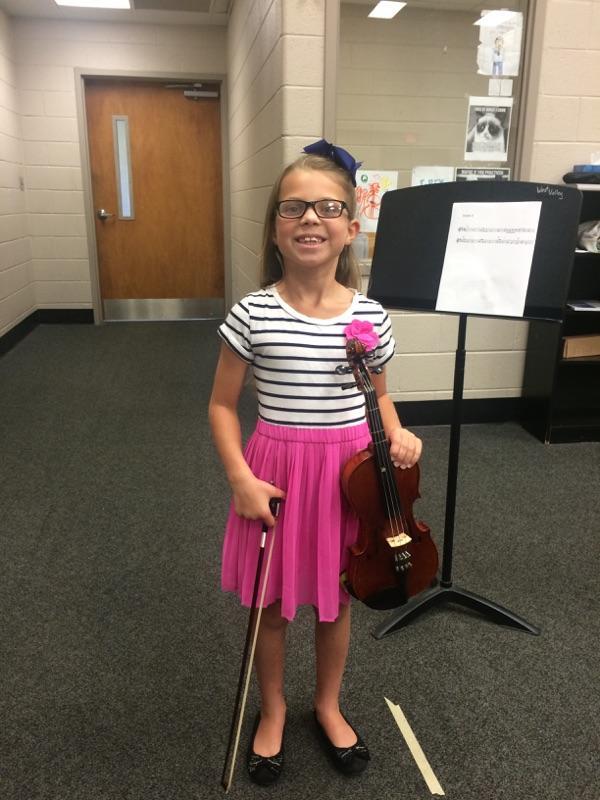
Here are some students at their auditions, held in August.


Here are some snapshots from a 2014 KSYO concert.


This post authored by Rachel Dellinger, KSO Director of Communications.

Wednesday, August 19, 2015

Tickets, Youth Orchestras, and Ageeana

The time has finally arrived, and the KSO's season and tickets are on sale now! While Monday was the launch date, handling fees will be waived on phone orders until this Friday the 21st. A cavalcade of guest conductors will be appearing throughout the year. It will be an eventful season as we seek a new director to pilot us through the unfamiliar yet beautiful waters ahead. Don't forget that Penny4Arts is still around. Under this plan a child can attend a KSO concert (or events presented by a host of other arts groups in town) for a penny, when accompanied by a paying adult. Kids fly free!

It's perhaps on the late side if your child wants to audition, but the Knoxville Symphony Youth Orchestra will be holding auditions this coming weekend. The KSYO braintrust is preparing for the group's 42nd year of performances, which will be November 16, February 14 and 15, and May 2. Information and repertoire can be found on the website or by clicking here.

-------------------------------------------***************************------------------------------------------

Only someone living in a math-deprived world would fail to notice that this is the figurative 100th anniversary of Knoxville's musical badge, Knoxville: Summer of 1915, written by Samuel Barber in 1947 and excerpting James Agee's prologue to A Death in the Family. I've been surfing for information on where James Agee's life began-- and also where his father's ended. It is interesting to think on these places when listening to the work. Two tremendous sources of knowledge than on these matters are the blogger commonly known as Knoxville Urban Guy, and Knoxville historian and writer Jack Neely.

A few years ago, KUG posted something about the site of Agee'schildhood home, which is now called James Agee Park in the Fort Sanders neighborhood, at Clinch Ave. From time to time, events are held here in celebration of the flag-bearer of Knoxville's literary heritage. While that particular block of the Fort has been given over to student housing over the past century, a block more evocative of that era might be the 1600 block of Forest Ave. Perhaps Agee's childhood friends resided there.


As for the accident that took Hugh James Agee's life in 1916 and inspired his son's Pulitzer-Prize-winning novel A Death in the Family, the location is not particularly glamorous, but certainly storied. Jack Neely is arguably Knoxville's most well-versed person in Ageeana, by dint of research for his Secret History columns in the Knoxville Mercury and its predecessor, the MetroPulse. The intersection of Clinton Highway and Emory Rd. is as close as modern configuration can determine the accident site. For years, Jack and others would congregate at the Checker Flag Sports Bar and toast the tragic event-- he has even spoken to someone who remembered the accident. Here is a MetroPulse  article (amazingly still available), mourning the closing of the Checker Flag four years ago.

Sunday, August 9, 2015

Rap on Clapping

Concert-goers new to the classical scene are always asking, “when can I clap?” In pondering an answer to this question, I came across some interesting facts and trends on various websites of symphony orchestras and record companies, and even some discrepancies as to the basis for the tradition. One source claims that the idea of saving applause for after the final movement of a piece is actually a pretty recent (only the last 50 years or so) phenomenon, while another says that the protocol is firmly rooted in the German tradition, dating back to Mozart's time.

How you might react at a concert should not be something to stress over. It's not your fault that composers wrote works in such a way as to “fake you out,” with false endings only a third of the way through a work. The tendency worldwide is to favor between-movement applause, especially after big endings where it is hard not to applaud, but not as an obligation after every single movement, regardless of its level of finality. After a movement that ends quietly, it is preferred that there be no applause, as the silence between movements here serves as a tension builder. When an entire work ends quietly, it is extremely jarring when one or maybe two attendees clap before the final note has even faded away. When this happens, the applauders, or shouters of “Bravo,” become performers, proving to all that they know when the work is over. (Or perhaps that they are following along in a score to the work). There are no awards for being the first person to clap; if there is any doubt, it's ok to be a follower and not a leader; the conductor will put down his baton and turn around and bow. I feel safe in quoting Billy Joel here; “Leave a tender moment alone.” Like most musicians, I cherish that span of silence that lay between the final placid note and the first pair of clapping hands. In any case, if someone's applause bothers you at a concert, it is NOT ok to express your dismay by giving them the hairy eyeball.

Let's look at some other questions that surface from time to time. I have used the terms “movement,” “piece,” and “work” above, but never the word “song.” To hear iTunes tell the story, everything that has sound is a “song,” whether it is a 5-hour Wagner Opera, a Bach cantata, or one of those little 20-second snippets of song on the Beatles' Let It Be album (like Dig It). Sure, iTunes, whatever. The concert hall reality is that classical composers write works (think “work of art”) or pieces, which may have several sections or movements. They may write song cycles, literally an album of songs, but that album as a body is referred to as a piece or a work.

Confusion happens when there are differing styles and tempi within an individual movement. Prokofiev did this a lot. It can also happen when two movements are linked together. (Musicians call this practice attacca, Italian for “attached”). In my first season here, maestro Kirk Trevor conducted Brahms 4th Symphony with the final two movements linked very seamlessly, and when the Thursday night performance was over, (thinking the third movement was actually 16 minutes long), no one clapped! He had to step off of the podium and bow to convince the audience that there was not another movement forthcoming. The Friday night show utilized a somewhat longer pause between the third and fourth movements.

I think we can all agree that, applause or not, there is no worse interrupter of a classical concert than a cell phone going off. We depend on the audience to be sticklers for silencing their phones, and for not answering them (but silencing them discreetly) if they do ring. I refer you to a scene in the 2000 Woody Allen film, Small Time Crooks, wherein Tracey Ullman answers a cellphone call in the middle of a cello recital. It's a ridiculously funny social commentary, brought off as only Woody can.

My words here are by no means the gospel on this subject. Here are a couple webpages whose content I found useful. NeoClassical is a blog by Holly Mulcahy, concertmaster of the Chattanooga Symphony. I especially liked that she had advice for experienced concert-goers and newbies alike, with some special guidelines for conductors. And this Colorado Public Radio story gives some historical background to the differing customs regarding this issue.